VMware ESX CVE-2026-41709 Exploited Logging Flaw Added to KEV Oct. 28
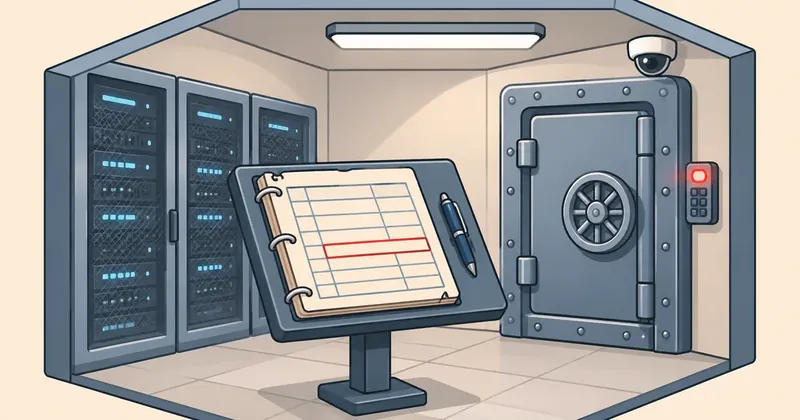
If you manage ESX, especially 8.0 and 9.x, check the build, install a fixed release and forward logs to another machine, because this vulnerability allows administrator actions to go unlogged.
1-minute summary
- Symptom / problem
- ผู้ที่มีสิทธิ์แอดมินบน ESX ทำบางคำสั่งโดยไม่ถูกบันทึกลง log ถูกใช้โจมตีจริงตาม CISA KEV
- Who should read
- ESX 9.1, 9.0 และ 8.0 ที่ build เก่ากว่ารุ่นที่แก้ รวมถึง VCF และ vSphere Foundation ที่ใช้ ESX รุ่นเหล่านี้
- Fix in short
- ลง build ที่แก้ตามตารางใน VMSA-2026-0006 ไม่มี workaround และเก็บ log ไว้ในเครื่องที่แอดมิน ESX แก้ไม่ได้
I noticed that CISA added VMware ESX CVE-2026-41709 to KEV on Oct. 28, 2026, so I went back and read the full Broadcom advisory. A CVSS score of just 2.7 sounds easy to overlook, even though CISA has confirmed exploitation in the wild.
What happened
CVE-2026-41709 is a CWE-778 (insufficient logging) vulnerability in VMware ESX. According to Broadcom, a "malicious administrator" can perform certain actions without those actions being logged. Ian Barton of CrowdStrike reported it. The main advisory is VMSA-2026-0006, first published on July 29, 2026 and last updated to revision .2 on Aug. 19, 2026, covering 5 CVEs in one advisory.
Put simply, this vulnerability does not give someone access to the machine. It lets someone who already has access and administrator privileges act without leaving a trace, which is exactly what an intruder wants after gaining administrator privileges: to keep the investigation team from seeing what they did.
Severity
- CVSS 3.1: 2.7 (Low) Vector
AV:N/AC:L/PR:H/UI:N/S:U/C:N/I:L/A:N.PR:Hmeans high privileges are already required, which keeps the score low. - CISA KEV: Added on Oct. 28, 2026, with a KEV remediation deadline of Nov. 11, 2026. The SSVC data in the CVE record lists exploitation as active and automatable as no.
- Ransomware: The KEV feed I obtained lists this as Unknown.
A Low score and a KEV listing do not contradict each other. The score measures only what the vulnerability can do on its own, not what attackers combine it with. In a real incident, a vulnerability that hides traces is valuable when combined with other stages of an attack. That is why I do not want anyone to see 2.7 and postpone it indefinitely.
The same advisory includes much more severe vulnerabilities, such as CVE-2026-59310 (vCenter, directory traversal in the Syslog server, CVSS 9.8), which CISA added to KEV on Aug. 18, 2026. If you are patching ESX this time, check the vCenter side of the same advisory too.
Affected and fixed releases
The numbers below come from VMSA-2026-0006 and the CVE record for CVE-2026-41709.
| ESX branch | Build fixing CVE-2026-41709 |
|---|---|
| 9.1.x | ESXi-9.1.0.0-25370933 |
| 9.0.x | ESXi-9.0.2.0100-25595025 |
| 8.0 | ESXi80U3j-25429389 (the advisory lists only U3j for this CVE; I have not seen it explicitly state that U3k includes the fix, so check the advisory first) |
| 8.0 U2f | The advisory does not list a fixed release |
| 7.0 | The advisory does not list a fixed release for this CVE |
| VMware Cloud Foundation 5.x | 5.2.4 |
The products listed as affected in the CVE record include VMware Cloud Foundation 9.1, 9.0 and 5.x before 5.2.4, vSphere Foundation 9.1 and 9.0, and Telco Cloud Platform 5.0 and 5.1. If your machine runs a release with no fixed version listed in the table, or a build newer than the one shown, open the original advisory and check whether it includes the fix. I will not guess for you. The instruction in the same advisory to contact Broadcom Support for ESX/vCenter 7.0 applies to other Critical vulnerabilities, not this one.
How to fix it
Broadcom states that there is no workaround. The only option is to install a fixed build. First, check the current build from the ESXi shell.
# ดูรุ่นและ build ของ ESXi
esxcli system version get
vmware -vl
Compare the build number returned (the number at the end of the build, such as 25595025) with the table above. If it is lower, the fix is not installed. For the update procedure, follow Broadcom's documentation for vSphere Lifecycle Manager or an offline bundle, whichever your organization uses. I am not including patch commands here because each organization uses a different method, and maintenance mode and vMotion need to be planned correctly first.
This vulnerability concerns missing log entries. Alongside patching, forward ESXi syslog to another machine where the ESX administrator cannot alter it, so you can compare it with local logs later. This is my own recommendation, not something from Broadcom's advisory.
Example of configuring a syslog destination (using sample values)
esxcli system syslog config set --loghost='udp://192.168.10.50:514'
esxcli system syslog reload
esxcli network firewall ruleset set -r syslog -e true
esxcli system syslog config get
The order I recommend
- Check the build on every host and compare it with the table above.
- Configure an off-host syslog destination. You can do this before patching because it does not require a reboot.
- Schedule patching through maintenance mode, one host at a time.
- Check the build again after patching, and review the vCenter side of the same advisory.
After configuration, verify that logs are actually being forwarded.
esxcli system syslog mark --message="syslog forward test"
Then search for that message on the log receiver. If you cannot find it, the destination or firewall configuration is still incorrect.
The KEV remediation deadline is Nov. 11, 2026. This is a requirement for US federal agencies and does not bind us, but it can serve as a reference for how quickly to patch.
Check whether you have been compromised
Based on the material I read, Broadcom and CISA have not published IOCs for attacks exploiting this vulnerability. And because the vulnerability leaves some actions unlogged, searching ESX's own logs cannot provide full confidence. What you can realistically do is examine what surrounds the gaps.
- Review SSH administrator accounts and accounts in vCenter for unfamiliar or newly created entries.
- Check whether SSH and ESXi Shell have been left enabled unnecessarily.
- Look for unusual gaps in the logs by comparing them with external syslog records (if you were already collecting them).
- If you suspect an intruder has gained administrator privileges, treat events during that period as incompletely accounted for, change passwords and review all permissions.
There is a report from 1 secondary website linking this vulnerability to a particular threat group. I could not find confirmation from official sources, so I have left those details out.
For Proxmox users
This CVE affects VMware products. Proxmox VE users do not run ESX code, so it does not directly apply, but the principle of forwarding logs off-host applies just as well.
Personally, if I had ESX running a build below those in the table, with management access available from multiple locations, I would schedule patching before the Nov. 11 KEV deadline without waiting for the regular cycle, because VM migrations need to be scheduled anyway. If management access were on a separate network with only a few people able to connect, I could delay a little, but I would finish setting up off-host syslog first, which takes only a few minutes.
P.S. If you still use ESX 7.0, the advisory does not list a fixed release for CVE-2026-41709 (for the other Critical vulnerabilities in the same advisory, Broadcom tells customers with extended support contracts to contact Support). I therefore cannot say whether a fix is available for 7.0. Ask Broadcom directly.
Sources: Broadcom VMSA-2026-0006 (https://support.broadcom.com/web/ecx/support-content-notification/-/external/content/SecurityAdvisories/0/38017), CVE record CVE-2026-41709 (https://www.cve.org/CVERecord?id=CVE-2026-41709), CVE record CVE-2026-59310 (https://www.cve.org/CVERecord?id=CVE-2026-59310), CISA Known Exploited Vulnerabilities Catalog (https://www.cisa.gov/known-exploited-vulnerabilities-catalog). Information current as of Nov. 5, 2026. If Broadcom updates the advisory or more attack details become available, I will come back and update this article.
Want us to set this up?
Get help with server setup, configuration, migration, or troubleshooting. Save time for the work that matters.
Hit something like this? Stuck somewhere?
Come trade notes on the LinuxThai board
Comments 0
No comments yet — be the first