#Homelab

Reading an Unknown Modbus Device: Verify Before Interpreting
My notes on tracking down an undocumented device on an RS485 bus, from scanning baud rates and addresses one combination at a time to proving which registers hold live values and which are dead, and the lesson that guessing a device's type from number patterns alone can lead to months of misinterpretation.
Borrowing a VLAN for Windows Tools That Need the Same L2
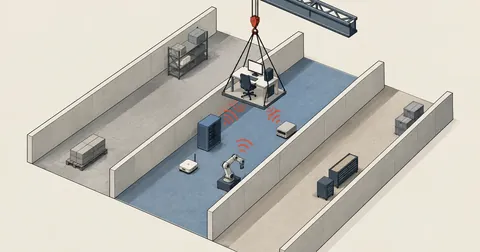
Many manufacturers' device discovery tools use broadcasts that cannot cross L3, so connecting over a VPN still leaves devices invisible. A solution that leaves switch ports alone is to put a small Windows VM on Proxmox with its interface directly in that VLAN, with pitfalls around vlan-aware bridges, a full thin pool breaking other VMs, and virtio leaving Windows without a network adapter after installation.
Control TP-Link Omada OC200 via REST API with Python
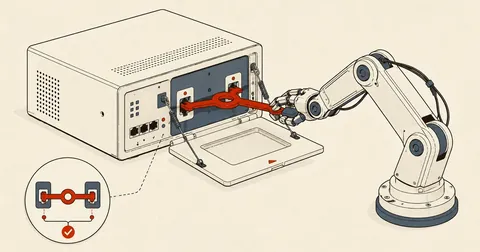
A practical guide to logging into an OC200 controller through REST API v2 with Python — handling CSRF tokens, self-signed certs, fetching sites/devices/SSIDs/DHCP/port-forward rules, and writing back with PATCH, including the read-only fields that cause a nonzero errorCode
Reading a DTSU666 3-Phase Meter with Raspberry Pi over Modbus RS485
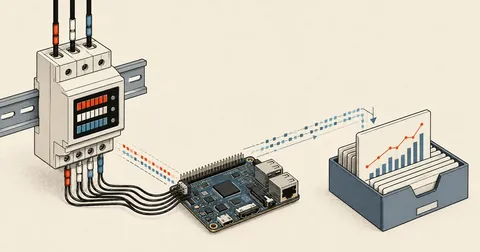
Notes on connecting a DTSU666 Smart Power Sensor to a Raspberry Pi over RS485, reading 3-phase electrical measurements from multiple meters using Modbus RTU, decoding 32-bit floats correctly, and storing them in SQLite/MySQL before exporting through MQTT and a REST API, including a negative-value bug I ran into myself
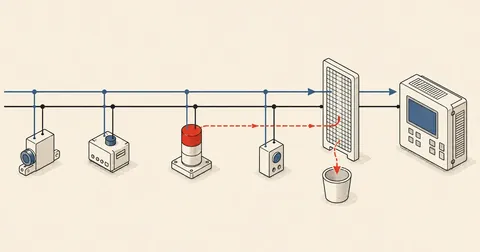
Reading Modbus RTU over an RS485 Gateway Without Phantom Values
Connecting multiple Modbus RTU meters/sensors on an RS485 bus through a serial-to-Ethernet gateway can produce phantom values, incorrect readings, or devices that do not actually exist — because a transparent gateway uses RTU-over-TCP, which requires assembling frames and calculating CRC yourself, and validating every reply. This article covers the rules I learned from doing it.
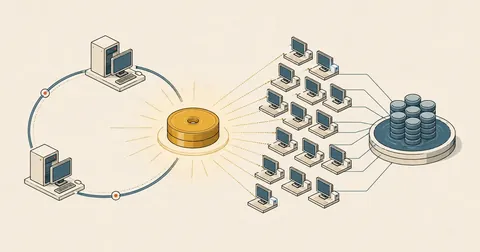
Using Claude to Upgrade Proxmox 8 to 9 and Rebuild Windows VMs
A real case using VS Code + Claude to upgrade an entire Proxmox cluster from 8 to 9, then delete and rebuild all Windows VMs for VDI without ever SSHing into a host myself. I have laid out the commands and scripts Claude generated during the actual work as steps that a person or AI can read and run again.

Build a Desktop AI Server with WSL2 + Ollama + OpenClaw
A record of building a home AI server from scratch, starting with Windows 11 IoT, installing WSL2 + Ubuntu, setting up Ollama to run LLMs on two GPUs, then adding multiple OpenClaw instances through systemd, covering drivers, custom Modelfiles, user isolation, and benchmarks