Ubuntu Patches Tomcat Login Bypass CVE-2026-101296—Update Now
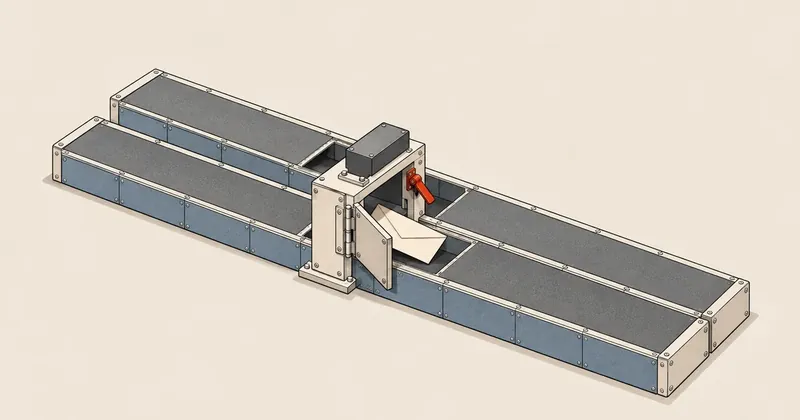
Tomcat administrators on Ubuntu should check their packages and configuration immediately, and accelerate patching if they use JNDIRealm with non-GSSAPI SASL or Tomcat 11 through AJP.
1-minute summary
- Symptom / problem
- JNDIRealm บางการตั้งค่ายอมให้ล็อกอินโดยไม่มีรหัสผ่านที่ถูกต้อง ส่วน AJP ของ Tomcat 11 อาจส่งข้อมูลตอบกลับปะปนข้ามคำขอ
- Who should read
- ผู้ใช้แพ็กเกจ Tomcat 10 บน Ubuntu 24.04 LTS, 26.04 LTS, 26.10 และ Tomcat 11 บน 26.04 LTS, 26.10 โดยผลกระทบขึ้นกับรุ่นและฟังก์ชันที่ใช้
- Fix in short
- อัปเดตแพ็กเกจตรงกับ Ubuntu release ตาม USN-9186-1 ทดสอบแอป รีสตาร์ต Tomcat และตรวจการล็อกอินกับเส้นทางรับส่งข้อมูลอีกครั้ง
I noticed Ubuntu had issued USN-9186-1 dated 23 Nov. 2026 for Tomcat, so I collected the fixed package versions and the checks needed after updating. Ubuntu has packaged patches for vulnerabilities Apache has already disclosed. Anyone running Java web applications needs to check both the installed version and how the application authenticates users.
Which fixed package versions has Ubuntu shipped?
The full package versions below come from the USN. Match them to your system's release, because each release uses a different revision.
| Ubuntu | Tomcat 10 | Tomcat 11 |
|---|---|---|
| 24.04 LTS | 10.1.61~us1-0ubuntu1~24.04.2 |
Not listed among this USN's packages |
| 26.04 LTS | 10.1.61~us1-0ubuntu1~26.04.1 |
11.0.27~us1-0ubuntu1~26.04.1 |
| 26.10 | 10.1.61~us1-0ubuntu1~26.10.1 |
11.0.27~us1-0ubuntu1~26.10.1 |
The notice covers tomcat10, libtomcat10-java, libtomcat10-embed-java and tomcat11, libtomcat11-java, libtomcat11-embed-java. Check both installed packages and applications that use embedded Tomcat. If an application bundles its own JARs or runs in a container, update the Tomcat it uses as well.
The Ubuntu pages for CVE-2026-101296 and CVE-2026-103119 still showed Needs evaluation for the relevant packages when I checked, while USN-9186-1 already listed fixed versions. This post uses package versions from the USN and Apache's advisories to distinguish the conditions under which each issue applies. I do not interpret a pending evaluation status as meaning a package is safe.
Realm and AJP are affected under different conditions
CVE-2026-101296 affects JNDIRealm with non-GSSAPI SASL. Password verification misses a critical step, allowing an attacker to log in without supplying the correct password. This issue depends on the configured authentication method.
For Tomcat 10 and 11, the affected ranges are 10.1.0-M1 through 10.1.60 and 11.0.0-M1 through 11.0.26, with fixes in 10.1.61 and 11.0.27, according to Ubuntu's CVE information.
For more on the same Realm issue, see Debian Tomcat 10: Check Realm and Patch CVE-2026-101296 Promptly, but Debian package versions cannot be used in place of Ubuntu's.
CVE-2026-103119 is an AJP issue in Tomcat 11. A buffer under-read occurs during large non-blocking writes, and some response data may leak into the next request on the same connection. Apache says the next request will usually fail and may receive data from the previous response.
It affects 11.0.0-M25 through 11.0.26 and is fixed in 11.0.27, according to the Tomcat 11 advisory. This CVE should not be assumed to affect Tomcat 10.
The USN also includes several other CVEs. The table below gives examples fixed in the same upstream releases, according to the Tomcat 10 security page and Tomcat 11. Even if you do not use JNDIRealm, you still need to check the other issues.
| Other CVEs in the USN | Impact described by Apache | Releases listing a fix |
|---|---|---|
| CVE-2026-101356 | HTTP/2 handling for async servlets may mix requests/responses between users after an error | 10.1.61 / 11.0.27 |
| CVE-2026-93446 | TLS 1.3 connections may fail intermittently | 10.1.61 / 11.0.27 |
| CVE-2026-88041 | HTTP/2 trailers from a previous request may leak into the next request | 10.1.61 / 11.0.27 |
| CVE-2026-74049 | The Jasper JSTL plug-in for <c:redirect> does not stop page processing immediately after a redirect |
10.1.61 / 11.0.27 |
| CVE-2026-74048 | OpenSSLLifecycleListener fails to enable FIPS but continues startup with non-FIPS JSSE | 10.1.61 / 11.0.27 |
How to use severity scores to prioritize work
Ubuntu lists the CVSS 3.1 score for CVE-2026-101296 as 8.1 High, with the vector CVSS:3.1/AV:N/AC:H/PR:N/UI:N/S:U/C:H/I:H/A:H. It can be attacked over the network without privileges or user interaction, but exploitation is difficult and requires a matching configuration.
CVE-2026-103119 scores 9.1 Critical, with the vector CVSS:3.1/AV:N/AC:L/PR:N/UI:N/S:U/C:H/I:N/A:H. This score assesses the possibility of data leakage and service disruption, rating both impacts High and the impact on data integrity None.
Apache rates both as Important, while Ubuntu assigns Medium priority, which is a different measure from CVSS. Do not use Medium as a reason to postpone patching if your system meets the conditions and accepts external input.
Apache's advisories say both CVEs were disclosed on 20 Oct. 2026, but do not state that they have been exploited. Neither CVE-2026-101296 nor CVE-2026-103119 appears in the 20 Nov. 2026 KEV edition, according to the KEV JSON in CISA's official repository, so neither entry has a KEV addition date or deadline. Absence from KEV does not mean there have been no attacks.
Complete the update, then restart
The USN warns that the update includes bug fixes, new features, and potentially incompatible changes. Before deploying it, back up the configuration and application, then test in an environment close to production, focusing on LDAP/SASL, login, permissions, HTTP/2, and any enabled AJP paths.
- Inspect Check the Ubuntu release, packages, and application service
- Prepare Back up configuration, test compatibility, and plan downtime
- Update Bring the packages in use up to the fixed versions for that release
- Restart Start new processes, then test login and responses through the proxy
Start by checking the system, packages, and service.
cat /etc/os-release
dpkg-query -W -f='${binary:Package}\t${Version}\n' 'tomcat10*' 'libtomcat10*' 'tomcat11*' 'libtomcat11*'
systemctl list-unit-files 'tomcat*'
This example is for a machine that already has tomcat10 installed. Check Candidate against the fixed version in the table first. --only-upgrade updates only packages that are already installed. For Tomcat 11, change the package and service names to the 11 series. Do not install a different series just to get a higher version number.
sudo apt update
apt-cache policy tomcat10 libtomcat10-java libtomcat10-embed-java
sudo apt install --only-upgrade tomcat10 libtomcat10-java
sudo systemctl restart tomcat10
If you use libtomcat10-embed-java, update it as well, then restart the application that loads it. The same principle applies to Tomcat 11. Check again after installation.
dpkg-query -W -f='${binary:Package}\t${Version}\n' tomcat10 libtomcat10-java
systemctl is-active tomcat10
sudo journalctl -u tomcat10 -b --no-pager
An active status only tells you the service is running. Try logging in with a test account using an incorrect password; access must be denied. Then use the correct password and check the application's permissions. Test through the same proxy path users take.
If immediate patching is not possible, administrators may temporarily restrict access to the service as appropriate to reduce exposure. This is not a workaround that the advisory endorses as fully addressing the vulnerabilities.
Check for anomalies and schedule the work
The USN and the entries for the two main CVEs on the cited Apache pages do not provide specific IOCs, such as hashes or request patterns for identifying attacks. I recommend comparing access logs, authentication logs, and application logs with logs from LDAP or the authentication system.
Look for logins that the logs cannot explain, along with responses delivered to the wrong user or mixed together through AJP/HTTP/2. These symptoms are starting points for investigation, but are not proof of an attack.
Patching closes the conditions that allow the vulnerabilities, but does not tell you whether data has already leaked. If you find access under the wrong account or responses crossing between users, preserve the relevant logs and time windows before they are rotated away, then assess session revocation and the scope of data that may have been exposed.
Personally, if I find non-GSSAPI SASL with JNDIRealm or AJP on an affected Tomcat 11 version, I will prioritize patching, testing, and restarting without waiting to bundle it with feature work. Systems that do not meet either condition should still have an update scheduled, because the same releases also fix HTTP/2 and other issues.
Sources: Ubuntu USN-9186-1, Ubuntu CVE-2026-101296, Ubuntu CVE-2026-103119, Apache Tomcat 10 Security, Apache Tomcat 11 Security, CISA KEV JSON — Sources checked on 23 Nov. 2026. This post focuses on vulnerabilities disclosed in October and packages listed in the USN dated 23 Nov. 2026, while KEV status refers to the 20 Nov. 2026 edition. I'll come back and update this later.
Want us to set this up?
Get help with server setup, configuration, migration, or troubleshooting. Save time for the work that matters.
Hit something like this? Stuck somewhere?
Come trade notes on the LinuxThai board


Comments 0
No comments yet — be the first