Security

Two Critical PHP RCE Flaws (php2shell): Patch Today
CVE-2026-109618 and CVE-2026-109619 are PHP RCE vulnerabilities with a CVSS score of 9.2 and public exploits already available. They affect every machine using PHP to handle web requests. The patched versions are 8.5.12, 8.4.27, 8.3.36, and 8.2.35. This note covers version checks, updates on Debian, RHEL, DirectAdmin, Docker, and Windows, and temporary settings while waiting for patches.

Secrets Set to 600, but 0644 Logs Go Offsite Every Night
The .env is encrypted and permissions are locked down on every secret file, but customer data still leaks off the machine every night through something nobody classifies as confidential: logs that every account on the machine can read, bundled into backups uploaded to object storage. Here is how I stop it at the source by logging only result codes.

Egress Firewall Breaks Domain Checks — Tests as root Pass
The domain order page reported every name as unavailable, even names I made up. The cause was an outbound DROP policy with port 43 missing from the allowed port list after an operating system migration. The trap was that tests as root passed every time. Testing must use the account that actually runs the app.

Mailbox Compromised or Just Password Guessing? Prove It First
Telling a customer their account has been compromised is an allegation that needs decisive evidence first. This article covers what counts as decisive evidence, two cases with opposite outcomes, and the case I nearly reported incorrectly.

Encrypt Secrets in .env and Decrypt Them When Config Loads
How to store passwords and API keys as ciphertext in Laravel's .env and have config decrypt them on load, using a single helper that detects encrypted values, plus the APP_KEY mismatch across environments that can bring everything down if you get it wrong.

WAF Returns 406 for Thai Text in POST: Fixing It Without Root
ModSecurity on the host returns 406 for certain Thai sentences in the POST body, preventing forms from saving — but as a hosting tenant, I cannot change the rules myself. This article shows how to isolate the offending text through black-box testing, then work around it with JS encoding on submit + middleware decoding in Laravel.

My Firewall Permanently Banned Googlebot and Hid Sites from Search
I investigated why sites disappeared from search results and found Googlebot in my own firewall's permanent ban list. 408 of 500 entries came from the counter tallying WAF false positives. How I lifted the bans, wrote a script to fetch official bot IP ranges into the ignore list daily, and dealt with a grep trap and the side effects of blocking entire countries.

AI Crawler Overloads ?add-to-cart= — Block It Without Hurting SEO
Server load triggered an email alert. The logs showed that 84% of the day's traffic came from one AI crawler following add-to-cart links for every product. I added layers of protection with robots.txt, rel=nofollow and nginx limit_req while keeping all product pages indexable.
Stolen Mailbox Password Sent 1,786 Spam Emails Unseen by CSF/LFD
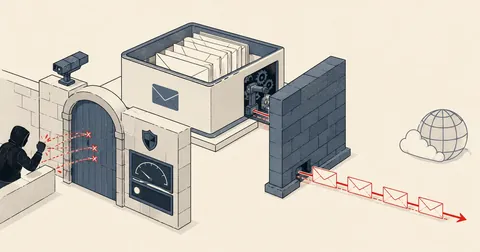
A real case of a stolen mailbox password used to send 50-75 spam emails a day, below a limit of 200, for 4 straight weeks without a single response from CSF/LFD/BFM because they only count failed authentication attempts, with the decisive question of whether an account was compromised or merely under attack, exim forensic commands, and a blocklist removal playbook
Auditing a Deployed Laravel Site — 3 Layers in Priority Order
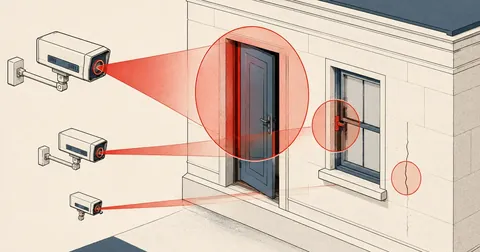
After deploying Laravel to production, check security in 3 layers — probe externally for exposed endpoints, check files/permissions on the server, then grep for vulnerabilities in the code. This article provides commands and P0-P2 priorities for deciding what to fix first.

nginx heap overflow spans 15 years—version checks aren't enough
CVE-2026-42533 affects nginx versions 0.9.6 through 1.31.2, spanning 15 years, but actual exposure depends on the config, not the version. The problem is that news reports describe narrower conditions than the real ones. Checking against those reports can return "safe" even when the config still meets the conditions.

Read-only Debian shared-host security audit — avoid banning yourself
Audit the security of a Debian server running DirectAdmin in read-only mode first — but the first trap is that scan traffic itself triggers CSF's brute-force rules and gets your own IP banned. This article lays out a safe audit sequence + areas to check in 2024-2026

libmodsecurity3 + nginx — only ctl:ruleEngine exclusions work
ModSecurity v3 (libmodsecurity3) + nginx + OWASP CRS — the ctl:ruleRemoveById taught in the guides does nothing and fails silently. This article covers what I found after trying every approach: ctl:ruleEngine works, scoped with a Host+URI chained rule, and the exclusion file must load before CRS.

Mail Checks Ban the Whole Office—Fixing It with Login Auto-Whitelist
Real mail clients behave exactly like bots — office machines keep retrying old passwords until CSF bans the whole office. This article covers an auto-whitelist system that watches for successful logins + Thai GeoIP, then grants a temporary allow for 24 hours, along with 5 pitfalls I learned the hard way.

Auto-Unblock the Office in CSF with a Geo+Account Gate
A real case of a client office whose IP changes daily, with a ghost device using an old password that repeatedly gets the whole office blocked by CSF. How I automated unblocking with a narrow account+geo gate that lets the real office through while keeping foreign credential attacks blocked.

Reading exim mainlog for Stuck Clients — Mail Forensics Part 1
How I read /var/log/exim/mainlog to distinguish an office machine using the wrong password from an attacker running a brute force attack, with the commands I use when customers need answers fast.

Tracing Dovecot IMAP/POP Failures on DirectAdmin and Keeping 90-Day Logs
A follow-up to Mail Forensics — trace IMAP/POP failures in /var/log/mail.log on DirectAdmin, distinguish stuck clients from attackers using cross-protocol ratios, and adjust logrotate to keep a full 90 days of logs instead of defaults that lose them within days

Tuning ModSecurity on DirectAdmin for Shared Hosting
The 4 additions I made beyond DA defaults — exclusions before CRS, a 1-hit credscan ban, a fix for the incorrect MODSEC_LOG path shipped by DA, and a self-heal cron to recover from rebuild overwrites

DA Migration Finale — Security Fixes and Hardening After Stabilizing
Wrapping up the cross-distro DirectAdmin migration series with security work after the server stabilized — sudoers wildcard CVE, OpenSSL SECLEVEL, ModSec exclusions before CRS, a csfpost drop-in, and 5 layers that survive DA updates

CSF Auto-Unblock for Ghost Devices Amid Botnet Brute Force
A real case on a DA shared host where a ghost device in an office got the entire office blocked by CSF every morning. I explain a 4-layer auto-unblock setup that distinguishes office devices from a botnet without accidentally unblocking attackers.