#Laravel

Passing the Sandbox Doesn't Mean It Works — 7 False Signals
The automated ordering system I wrote passed every command in a provider's sandbox, but almost everything the sandbox told me differed from reality, from response times and charges to accepted names and items that were created successfully but could not be found. Here are 7 false signals and how to write code that does not fall for them.

A Blank Page with No Errors, All Because I Named a Function top
After deployment, the page was blank, the logs had no errors, and node --check found nothing wrong. But the browser stopped the entire script before the first line ran because a function named top collided with window.top. Here are the names to avoid, the script loading order trap, and the Playwright check every project should have.

Writing to DirectAdmin Through Panel Forms When the API Only Reads
Notes on letting a back-office app create and edit hosting packages in DirectAdmin when the official CMD_API only provides read operations, requiring POST requests directly to control panel forms, with verification rules that prohibit regex and two layers of kill switches disabled by default.

Ingesting Mail Without Disrupting Someone Else's Mailbox
The mailbox the app fetches from is one people actually use every day — fetching with UNSEEN silently misses mail when the owner reads it on their phone before cron runs. The right approach is UID SEARCH paired with UIDVALIDITY and BODY.PEEK, with deduplication handled on our side.

Reads from a Replica Must Show How Many Minutes Old the Data Is
replication can report a lag of 0 seconds while the data is stuck at yesterday, because these two signals measure different things — how to set up a monitor that checks both Seconds_Behind_Master and business data freshness, catches anyone writing directly to the slave, and has another check watching the monitor itself

Let AI Read Documents, but Let Code Do the Math
The controller requires manually entered values to fall between 0 and 100, but the path where AI reads values from documents and feeds them in only checks whether they are numeric. A single negative value inflated the result to 5.25 times what it should have been without an error — a lesson in treating AI output as untrusted input, just like values entered by people.

The App Uses UTC, People Use Thai Time — 7 Hours Off, No Errors
Scheduled for three in the afternoon, published at ten at night. No errors, nothing wrong in the logs, because the app stores UTC while the person entering the time thinks in Thai time. This article traces the issue from an env setting that has no effect to the single line that writes Thai wall-clock time into a column everyone reads as UTC.

Secrets Set to 600, but 0644 Logs Go Offsite Every Night
The .env is encrypted and permissions are locked down on every secret file, but customer data still leaks off the machine every night through something nobody classifies as confidential: logs that every account on the machine can read, bundled into backups uploaded to object storage. Here is how I stop it at the source by logging only result codes.

Web vs. Worker — mkdir 0700 Disables Inherited ACL Permissions
One app runs as two users, with php-fpm handling web requests and a separate account running the queue. Even with default ACLs fully configured, they still cannot write to each other's directories. The cause is mkdir with mode 0700, which sets a mask that wipes out the effective ACL permissions, plus a deletion trap that requires permissions on the directory, not the file.

tinker Sends Mail but the Web Can't — proc_open Disabled in FPM
Sending mail from tinker works perfectly, but submitting the actual form sends nothing, and the mail log has no entries — because CLI and PHP-FPM are not the same PHP environment. Includes a working SMTP AUTH configuration for DirectAdmin hosting and the From rule you must get right.

Site Not Updating After Deploy — Clear All Five Cache Layers
The files are uploaded, but the site still shows the old version, even after Ctrl+F5 — because five cache layers sit between the files on disk and what people see, and each needs a different clearing method. This article covers the sequence I use regularly, along with the trap that leaves the site stuck on 500 after clearing the view cache.

route:cache Turns Every GET into 405 — The Sub-path Trap
Deployment finished, I ran optimize as the guides suggested, and every page returned 405 Method Not Allowed even though route:list confirmed the routes were correct — a route cache that breaks only on certain servers, how to isolate it in 30 seconds, and three other issues I found while deploying an app under a sub-path.

php -l Passes, Web Pages Return 500 — A Compile Gate Before Commit
Templates broke twice in one month even though every php -l check passed, because php -l does not understand Blade syntax. This article covers the six-stage gate I put before commit — compiling the views and then linting the compiled files, plus a script that sweeps every GET route through the Kernel.

Always Claim the State Before Sending Anything Out
A "read the state, then send" guard looks safe until a worker gets killed after sending but before writing to the database, and a retry sends the same thing to the customer twice. This article covers the full set of duplicate prevention measures I use, from atomic claims to retry_after and failed() handlers that must never overwrite a successful state.

One Codebase, Two Roles: Hosted Web, Worker at Home
The whole system used to run on one machine behind a home internet connection. When that machine went down, the team could not use anything. I split it into two roles using the same codebase — the web runs on an always-on host, while heavy work stays on the home machine, which pulls jobs itself, with an atomic job-claim table and an 18-step cutover plan with a rollback path.

Static on DirectAdmin: GET Returns 404 but HEAD Returns 200
I uploaded a static site to public_html and could not open it. Small files worked, large files returned 404, but HEAD returned 200 for every file. The cause was Laravel's .htaccess at the docroot, funneling everything into the front controller. This article covers the diagnosis and three ways out.

Auditing prod with real customer data without leaving a single row
The system owner asked me to test the entire system on the live server holding customer data without leaving even a single junk row behind. My approach was to bootstrap Laravel myself and call controllers directly inside a transaction that I rolled back, with a COUNT of every table before and after as evidence.

Every File Is Backed Up, but I Still Can't Rebuild the Server
The database dump is complete, the code tar is complete, and all the secrets are there, but put them on a blank machine and the site will not come up, because the things that actually make the server work were never in the backup files. This article lists what disappears with the machine and the recovery sequence I wrote for my future self.

Generating Thai PDF Quotes with Chromium and the Pitfalls I Hit
Building a system to generate PDF quotations from HTML with Chromium for multiple companies in a group and multiple templates, from an Executable doesn't exist error caused by looking for the wrong headless shell, to A4 layout and pagination, sanitizing Thai filenames, and a token-based document numbering system where an accidental slash broke the path.

Moving Computation from PHP to the Browser: 12 Seconds to 12 ms
A single page ran tens of thousands of subqueries and took 12 seconds to load. I fixed it by precomputing a summary table, sending a single 107 KB dataset, and moving the formulas to the browser, bringing computation down to 12 milliseconds, with a parity test that requires JS results to match PHP on every row.

Encrypt Secrets in .env and Decrypt Them When Config Loads
How to store passwords and API keys as ciphertext in Laravel's .env and have config decrypt them on load, using a single helper that detects encrypted values, plus the APP_KEY mismatch across environments that can bring everything down if you get it wrong.
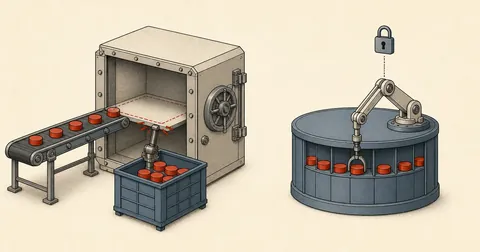
Laravel Queues on Shared Hosting — Don't Share Redis with Cache
If you're enabling queues for Laravel on shared hosting and planning to separate the queue from cache with different REDIS_DB numbers, that won't help. maxmemory and eviction apply to the whole instance, not individual DBs. This article explains why I chose the database driver instead, with complete systemd units to replace Supervisor.

Laravel Behind a Proxy Sees 127.0.0.1 — Silent Form, No Error
A contact form on DirectAdmin says the sender is not human, sends no mail, and leaves every log silent — the cause is Laravel behind nginx-to-apache seeing $request->ip() as 127.0.0.1, failing the bot check and returning before the mail is sent, with an explanation of why TrustProxies must not use '*'

WAF Returns 406 for Thai Text in POST: Fixing It Without Root
ModSecurity on the host returns 406 for certain Thai sentences in the POST body, preventing forms from saving — but as a hosting tenant, I cannot change the rules myself. This article shows how to isolate the offending text through black-box testing, then work around it with JS encoding on submit + middleware decoding in Laravel.
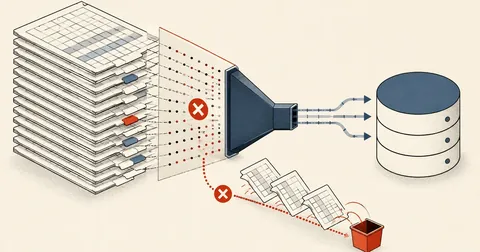
Bulk Import Legacy .xls Files into Laravel with PhpSpreadsheet
Legacy .xls files with Thai headers encoded in tis-620 have unreadable column names, large files make PhpSpreadsheet exhaust memory and crash, and files users merge themselves contain duplicate rows — use column positions instead of names, add a read filter, and deduplicate with a natural key.
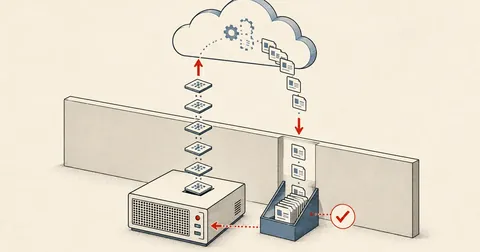
Factory to Cloud Behind NAT: Push Snapshots and a Command Queue
The production machine sits in a LAN behind NAT with no public IP, but the owner wants to view data on a cloud website and make edits from a phone that reach the internal machine — possible without opening ports or setting up a VPN, using push snapshots + an edit command queue + idempotent acks

Auditing a Deployed Laravel Site — 3 Layers in Priority Order
After deploying Laravel to production, check security in 3 layers — probe externally for exposed endpoints, check files/permissions on the server, then grep for vulnerabilities in the code. This article provides commands and P0-P2 priorities for deciding what to fix first.