#Tools

Passing the Sandbox Doesn't Mean It Works — 7 False Signals
The automated ordering system I wrote passed every command in a provider's sandbox, but almost everything the sandbox told me differed from reality, from response times and charges to accepted names and items that were created successfully but could not be found. Here are 7 false signals and how to write code that does not fall for them.
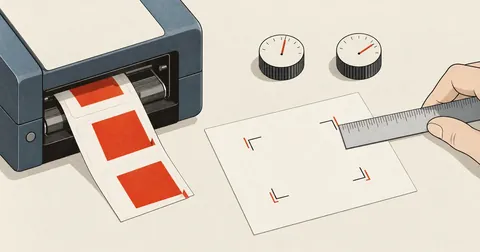
Labels Printing Off-Center? Calibrate the Print Offset Once
After getting the label printer to fire its printhead, the next problem was that the text missed the sticker. I stopped guessing and printed rulers and corner markers to measure it, then clearly separated paper size, printable area, and offset into three distinct values.
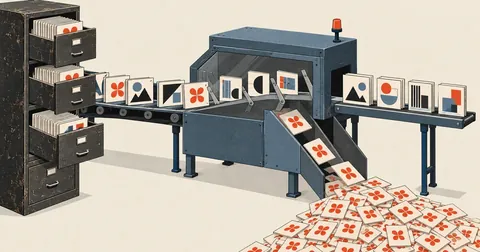
Migrating an Old .aspx Site to a JSON Catalog and Filtering Images
The owner of an old .aspx site asked me to rebuild it, but more than a decade of content was in a database I could no longer access. I collected the pages from the site itself to build a JSON catalog that preserved every legacy_id, then wrote a three-layer image filter to keep stray QR codes from becoming article covers.
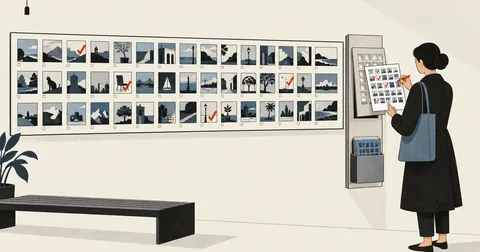
Let Clients Pick Photos on a Web Page Without a Login
When the person choosing photos for a website is not comfortable with computers, adding registration and login means the work stops at the login screen. This article covers a photo picker with no authentication at all, but with a server endpoint that checks every value against an allowlist strict enough to leave nothing from arbitrary input, plus limits at every layer and a backup before every write.

Scripting Government PDF Forms and Making Safer ID Copies
Government PDFs distributed as fillable forms often cannot actually handle Thai text. Subdivided fields let digits run over the borders, and tone marks collide with vowels above the line. This article covers listing field names first, filling the fields and flattening them into page content, drawing Thai text with a font that includes all the vowel marks, and making actual-size ID copies with purpose-specific watermarks.

Building a Graph API Page App with Three Required Endpoints
When a backend needs to read and reply to Page messages on its own, the only proper route is to build an app and pass the platform's review. This article covers three endpoints the platform requires but people forget until they fail review, the correct way to verify incoming request signatures, and the steps to exchange a short-lived token for a Page token stored outside the web root.
A Report Form for a Static Site with No Backend
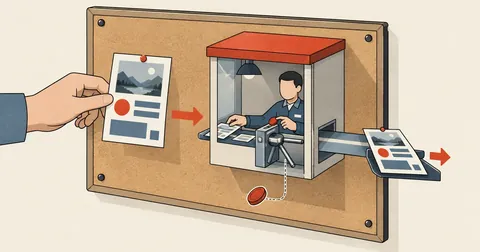
A calculator site made entirely of static files has no server to handle forms, but users still need a way to report mistakes in the formulas. This article covers the one approach I chose—a single worker file that accepts POST requests on one route, verifies Turnstile on the server using the real client IP, accepts images pasted from the clipboard, and sends email from the network edge—along with three traps that cost me an entire night.

Reverse Engineering Spreadsheet Constants into Formulas
A sheet has a criteria table sitting beside the calculations, but no VLOOKUP connects them. People read the table and type values into cells themselves, and mistakes go unnoticed. This article covers separating formula cells from manually entered cells, then reconstructing a single formula that matches all 16 values in a multiplier column.

Speed Up Screen Recordings While Keeping the Original Clock
How to make a timelapse from a screen recording by speeding up idle sections more than active sections, using split, trim, and setpts, then joining them with concat. The main trap is that drawtext must come before setpts for the clock to follow the original timeline instead of the accelerated one.
Making 20,000+ API Calls That Resume Without Leaving Corrupt Files
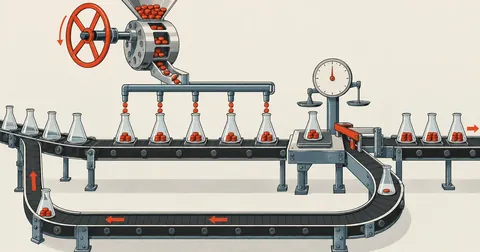
Generating 26,850 files through an API limited to 20 calls per minute requires three pieces—a system-wide throttle, resuming from what is already on disk, and a separate file validator—because files interrupted by network failures still have the right extension and a nonzero size.

Reading ID Cards from the Web with a Localhost Agent
Browsers cannot access smart card readers directly. A workable approach is to write a small agent that opens a port on localhost and let the web page call it. This article covers secure contexts, CORS preflight, port conflicts with other agents, PC/SC in SHARED mode, decoding TIS-620 manually, and the day antivirus flagged the program as a backdoor.

Rebuilding an Off-Scale PDF Plan at Real Dimensions
Presentation plans are often drawn block by block, with different scales for the x and y axes and different scales again for each room. Calibrating the whole page once and tracing it gets everything wrong. This article covers extracting coordinates from paper into metres by recalculating the scale for every room, counting objects with colour-blob BFS instead of by eye, and drawing them back into a model at their real dimensions.

A Single-Page PHP and SQLite Document Vault That Keeps Originals
A document photo storage app for government submissions, using photos taken on site with a phone. Each upload produces three files—the display image, the original, and saved crop settings—so adjustments can be made later without losing quality, with automatic migration from JSON to SQLite and web server restrictions on folders containing personal data.
Printing Dozens of Government Forms from HTML with Correct Margins
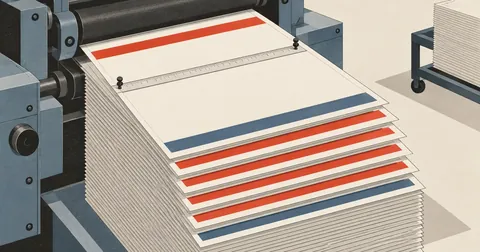
A government submission document system where users click Print in their browsers and every sheet must fit within its margins, from measuring the actual printable area in millimeters and repeating headers and footers without position fixed, to four image frame types for different documents and automated overflow checks with Playwright instead of inspecting every sheet.

News Stuck for Three Days Because the Feed Wasn't Sorted by Date
The news site's homepage showed the same day's stories for three days straight, even though scheduled jobs ran, translations finished, and every step reported success. The causes were an RSS feed sorted by relevance rather than date, string sorting of pubDate that actually sorted by weekday name, and requesting too few stories, leaving nothing after filtering before the rest even got a look.
Sending Automated Job Files to Telegram and the Bot API's 50 MB Limit
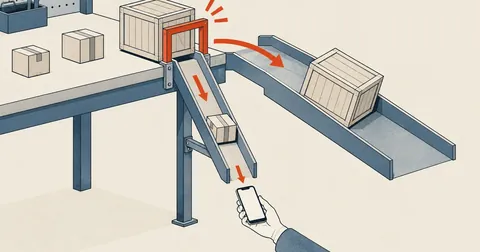
Set up a small local service that takes files from scripts and sends them to me on Telegram, with outbound delivery only, no polling, and no incoming commands, along with the actual Bot API limits to know before writing it, including 50 MB per file, images over 10 MB that must be sent as documents, and the Thai text trap in curl on Windows.
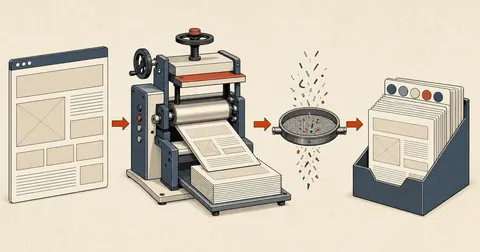
Generating Thai PDF Quotes with Chromium and the Pitfalls I Hit
Building a system to generate PDF quotations from HTML with Chromium for multiple companies in a group and multiple templates, from an Executable doesn't exist error caused by looking for the wrong headless shell, to A4 layout and pagination, sanitizing Thai filenames, and a token-based document numbering system where an accidental slash broke the path.
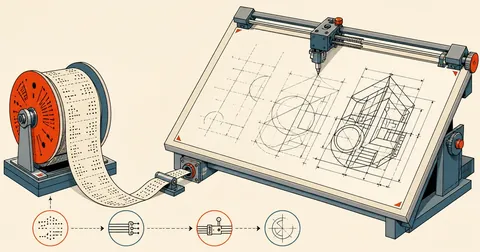
Driving AutoCAD from PowerShell via COM — Scripted Drafting
AutoCAD exposes COM for scripting just like Excel. Connect to the running instance with New-Object, then draw lines, circles, text, and 3D boxes, create layers, add dimensions, and save files entirely from PowerShell, with four traps I hit myself and learned never to repeat.
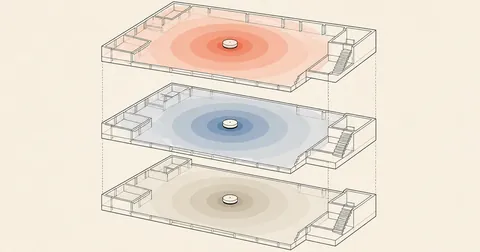
Planning 2.4GHz WiFi Channels 1/6/11 and Multi-Floor Heatmaps
A five-story building with seven APs per floor needs a 2.4GHz channel plan that avoids overlap both horizontally and vertically. This article covers the 1/6/11 principle, per-floor channel tables, the actual Tx power and RSSI threshold settings, and a Python script that labels floor plans with channels using PIL before a walkthrough survey to create a heatmap.

Building a Single-Screen Ping Monitor with C++, ImGui and DirectX 11
A small app that pings every device on the network at once and puts the results on one screen. It sends ICMP directly through iphlpapi without calling ping.exe, runs one thread per host, communicates with the UI through std::atomic, renders with Dear ImGui on DirectX 11, and builds with CMake and a single PowerShell script.