
#Architecture

Always Claim the State Before Sending Anything Out
A "read the state, then send" guard looks safe until a worker gets killed after sending but before writing to the database, and a retry sends the same thing to the customer twice. This article covers the full set of duplicate prevention measures I use, from atomic claims to retry_after and failed() handlers that must never overwrite a successful state.

One Codebase, Two Roles: Hosted Web, Worker at Home
The whole system used to run on one machine behind a home internet connection. When that machine went down, the team could not use anything. I split it into two roles using the same codebase — the web runs on an always-on host, while heavy work stays on the home machine, which pulls jobs itself, with an atomic job-claim table and an 18-step cutover plan with a rollback path.
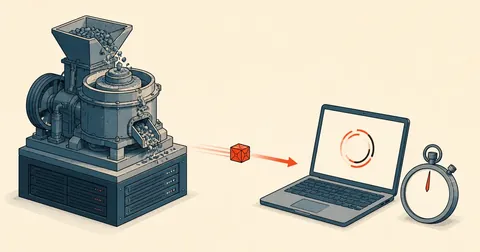
Moving Computation from PHP to the Browser: 12 Seconds to 12 ms
A single page ran tens of thousands of subqueries and took 12 seconds to load. I fixed it by precomputing a summary table, sending a single 107 KB dataset, and moving the formulas to the browser, bringing computation down to 12 milliseconds, with a parity test that requires JS results to match PHP on every row.
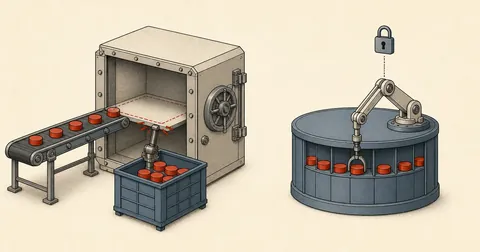
Laravel Queues on Shared Hosting — Don't Share Redis with Cache
If you're enabling queues for Laravel on shared hosting and planning to separate the queue from cache with different REDIS_DB numbers, that won't help. maxmemory and eviction apply to the whole instance, not individual DBs. This article explains why I chose the database driver instead, with complete systemd units to replace Supervisor.
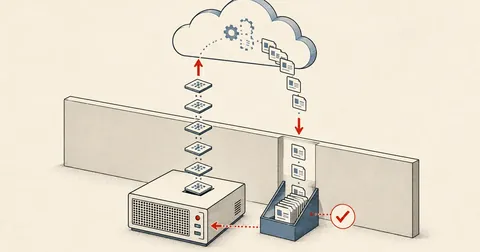
Factory to Cloud Behind NAT: Push Snapshots and a Command Queue
The production machine sits in a LAN behind NAT with no public IP, but the owner wants to view data on a cloud website and make edits from a phone that reach the internal machine — possible without opening ports or setting up a VPN, using push snapshots + an edit command queue + idempotent acks